Jiuzhaigou Valley Scenic and Historic Interest Area
Overview
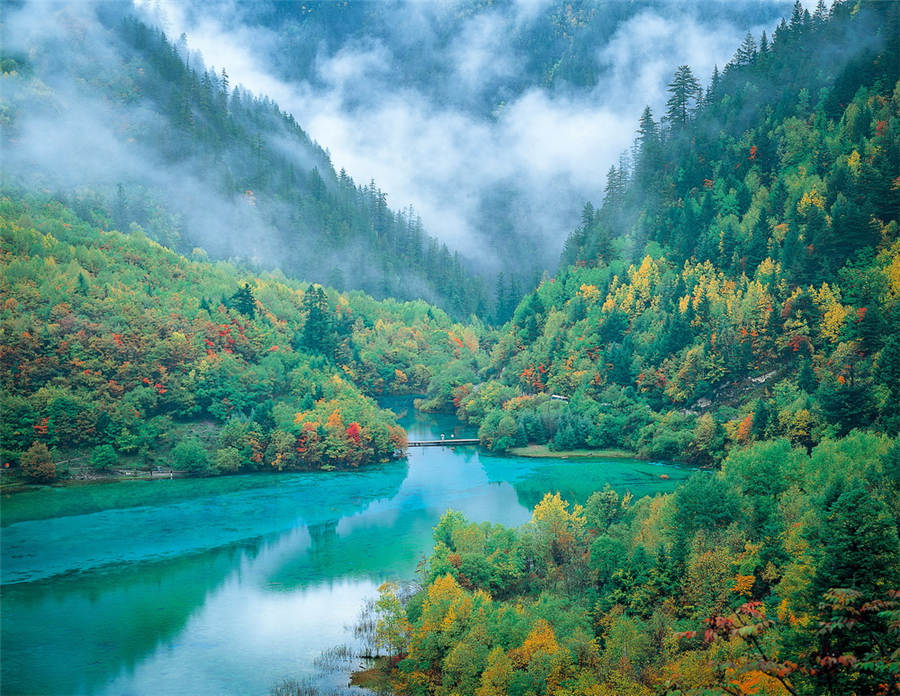
Jiuzhaigou Valley Scenic and Historic Interest Area, located in the northern part of Sichuan Province, China, is a renowned natural site celebrated for its breathtaking landscapes and ecological diversity. Spanning over 72,000 hectares, Jiuzhaigou is part of the Minshan Mountains, lying on the edge of the Qinghai-Tibetan plateau. It is characterized by its dramatic altitudes, which reach up to around 4,500 meters, creating a series of diverse forest ecosystems. The area is particularly noted for its narrow conic karst landforms, spectacular waterfalls, and its fairyland-like landscape that includes vibrant blue, green, and purplish pools and lakes. Recognized for its exceptional natural beauty, Jiuzhaigou Valley was inscribed by UNESCO as a World Heritage Site in 1992 due to its outstanding natural phenomena and aesthetic significance.
Natural Features and Ecology
Jiuzhaigou Valley is a natural museum of alpine karst hydrology, offering a wealth of opportunities for ecological research and conservation. The area preserves crucial forest ecosystems, including old-growth forests that provide habitats for numerous endangered species such as the giant panda and the Sichuan takin. The ecosystem is predominantly classified as temperate broad-leaf forest and woodlands, with mixed mountain and highland systems. Nearly 300 square kilometers of the core scenic area are covered by virgin mixed forests, which exhibit vibrant hues of yellow, orange, and red in autumn, making the season particularly attractive for visitors.
The climate in Jiuzhaigou is a subtropical to temperate monsoon, with annual rainfall averaging 761 millimeters, though it can exceed 1,000 millimeters in the cloud forest. This rainfall supports the lush, diverse ecosystem, which includes a variety of endemic plant species such as rhododendron and bamboo. The valley is home to many species of rare and endangered wildlife, such as the giant panda, takin and golden snub-nosed monkey. The fragile populations of these species are a concern, especially given the increasing number of tourists visiting the area.
History and Culture
The cultural significance of Jiuzhaigou is deeply intertwined with its natural landscape. The name "Jiuzhaigou" translates to "Nine Village Valley," reflecting the nine Tibetan settlements that are a part of the area's rich cultural tapestry. These settlements are located on the eastern edge of the Qinghai-Tibet Plateau, contributing to the valley's unique cultural identity that draws visitors who are interested in both its natural and cultural heritage.
Jiuzhaigou's history as a tourist destination has seen a dramatic transformation, particularly following its designation as a UNESCO World Heritage Site in 1992. The valley has since become a significant area of interest, attracting millions of visitors annually who are drawn not only by its natural beauty but also by the opportunity to experience Tibetan and Qiang cultures firsthand. Efforts have been made to balance ecological preservation with the needs of tourism, ensuring that the local communities benefit economically while maintaining the area's environmental integrity.
Scenic Spots and Tourism
Jiuzhaigou is renowned for its scenic spots, which include 108 alpine lakes, stunning waterfalls, and distinctive karst formations. Notable spots include the Nuorilang Waterfall, which was one of the widest waterfalls in Jiuzhaigou Valley before it was partially damaged by a magnitude 7.0 earthquake in 2017. The collapse of the waterfall was one of many impacts the earthquake had on the region, but extensive reconstruction efforts have allowed the area to recover significantly.
The park offers a range of attractions for tourists, from the tranquil beauty of Changhai Lake to the vibrant hues of Five Flower Lake. These natural wonders are complemented by a comprehensive tourism infrastructure designed to facilitate visits while minimizing ecological impact. The park's capacity is closely managed, with a daily maximum of 41,000 visitors, ensuring that the experience remains enjoyable and sustainable.
Environmental Protection and Recovery
Environmental protection is a primary focus in Jiuzhaigou, especially following the 2017 earthquake that caused significant damage to the landscape. The restoration process has been guided by principles that prioritize nature's self-healing capabilities, supplemented by necessary human intervention. Rebuilding efforts have included ecological engineering approaches, such as using eco-friendly materials to restore damaged sites like the Sparkling Lake.
The management of Jiuzhaigou emphasizes the importance of sustainable development, balancing tourist activities with the preservation of natural and cultural resources. This involves regulating visitor behavior, providing education on ecological protection, and ensuring that tourism does not compromise the area's outstanding universal value. The park's ongoing monitoring and adaptive management strategies are crucial in addressing challenges posed by climate change and human impact, ensuring that Jiuzhaigou continues to enchant visitors with its unparalleled beauty for generations to come.
Article reference1. Jiuzhaigou fully reopens to visitors after earthquake. en.chinaculture.org. 20212. Jiuzhaigou National Park attracts tourists after reopening. chinadaily.com.cn. 20193. Jiuzhaigou Valley Scenic and Historic Interest Area. chinadaily.com.cn. 2018Photo Gallery(22 pictures)CategoriesCultural HeritageTagWorld Heritage in ChinaNatural WonderCatalogue1. Overview2. Natural Features and Ecology3. History and Culture4. Scenic Spots and Tourism5. Environmental Protection and Recovery-
- []
来源: Culturepedia - Jiuzhaigou Valley Scenic and Historic Interest Area








